
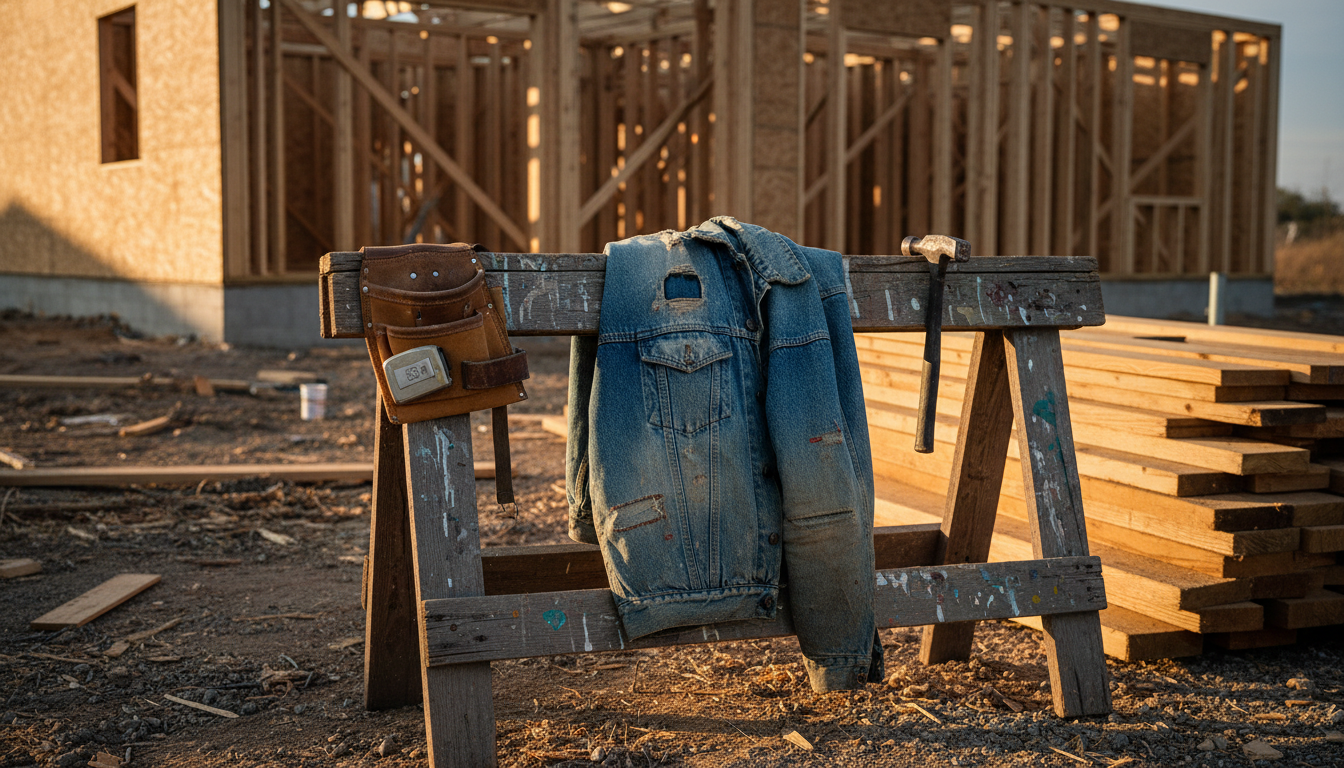
America’s homebuilders just slammed the brakes — hard. Housing starts cratered 12.4% in July, the steepest monthly plunge since the post-pandemic rollercoaster, as high mortgage rates and a glut of unsold inventory turned job sites into ghost towns. But here’s the twist: building permits surged 5%, meaning builders are getting the green light and then walking away.
The Numbers
Here’s what the Commerce Department reported Tuesday morning (all figures seasonally adjusted annual rates):
- Housing starts: 1.239 million, down 12.4% from June’s 1.415 million. Economists had penciled in 1.35 million. The miss was brutal.
- Single-family starts: 808,000, down 9.9% month-over-month and 15.7% year-over-year. That’s the core of the housing market, and it’s shrinking fast.
- Building permits: 1.443 million, up 5.0% from June. Consensus was 1.37 million. Single-family permits rose 2.5% to 894,000.
- Import prices: Down 0.4% in July (consensus: +0.1%). Fuel imports dropped 7.2%, the biggest decline since September 2024.
- Export prices: Down 1.3% in July (consensus: +0.2%). The steepest one-month drop in the current cycle.
- Industrial production: Up 0.2% in July, slightly below the 0.3% consensus. Capacity utilization ticked up to 76.3%.
The Permits Paradox
This is the head-scratcher of the day. Building permits jumped 5% — meaning developers are pulling paperwork and getting approvals. But actual construction starts fell off a cliff. The single-family permit-to-start gap is widening, and that’s not normal.
What gives? The Reuters report points to three culprits: mortgage rates still hovering near 6.77% (the 30-year fixed barely budged lower last week), a growing backlog of unsold new homes, and building costs that keep climbing thanks to the Iran conflict driving up materials and energy prices. Builders are getting permits to keep their options open — but they’re not breaking ground until the math works.
The NAHB’s own sentiment gauge ticked up unexpectedly on Monday, but the industry group was blunt: confidence remains “significantly subdued” in the face of economic uncertainty and war-driven cost pressures. Translation: builders feel slightly less terrible, but they’re still not building.
The Silver Lining: Disinflation
Buried in the housing gloom was a genuine bright spot. Import prices fell 0.4% in July — the second straight monthly decline and the largest drop since May 2025. Export prices fell even harder, down 1.3%. The year-over-year numbers are still elevated (imports +5.9%, exports +8.2%), but the momentum has shifted decisively lower.
The driver was fuel. Import fuel prices plunged 7.2% in July — petroleum alone dropped 7.5%. That’s the kind of number that shows up in next month’s CPI and PPI with a lag. Nonfuel imports actually rose 0.4%, driven by capital goods (+0.9%) and food (+0.9%), but the fuel crash swamped everything else.
One eyebrow-raising detail: import prices from China jumped 0.8% in July — the largest monthly increase since July 2008. That’s a seventeen-year record. Tariffs? Supply chain shifts? Something’s moving under the surface.
Factories Keep Chugging
The Fed’s industrial production report landed with a shrug. Total output rose 0.2% in July, a hair below the 0.3% consensus. Manufacturing output matched at 0.2%, and capacity utilization edged up to 76.3% — still 3.1 points below the 50-year average. The standout was business equipment, up 0.8% in July and 6.6% year-over-year — companies are still investing in machinery even as consumers pull back.
Market Reaction
U.S. stock futures were already in the red before the housing data hit, dragged down by fading Iran peace prospects driving oil and bond yields higher. The housing miss added another layer of gloom. The 10-year Treasury yield ticked higher as markets priced in the mixed signals — disinflation is good for rate cuts, but a housing crash isn’t great for anything.
The Bottom Line
July delivered a split-screen economy. On one side, housing starts are in freefall — and if the permits-to-starts gap keeps widening, it signals builders see demand they can’t afford to meet. On the other, import prices are falling fast, which should flow through to consumer inflation in the months ahead. The Fed is staring at a housing market that needs rate relief and an inflation picture that’s finally cooperating. The question is whether the relief arrives before the construction trades start looking for work elsewhere.