
The nation’s small business owners are losing faith — and they’re losing it just as the Federal Reserve’s inflation fight enters a critical week. The NFIB’s Small Business Optimism Index slipped 0.8 points in September to 97.9, dropping below its 52-year average of 98.0 for the first time in three months, the group reported Tuesday.
It wasn’t a cliff dive. But the direction is clear, and the timing couldn’t be sharper: tomorrow morning, the Bureau of Labor Statistics drops the September Consumer Price Index — the last major inflation reading before the Fed’s October 28–29 meeting.
By the Numbers
The NFIB survey, conducted among its members in September, paints a picture of Main Street running low on confidence:
- Overall optimism: 97.9, down from 98.7 in August and below the 52-year average of 98.0. (Source: NFIB, October 13, 2026)
- Expansion plans: Only 7% of owners said now is a good time to expand — down 5 points from August. (Source: NFIB)
- Inflation fears: 20% cited inflation as their single most important problem, up 4 points from August. The historical average is just 7%. (Source: NFIB)
- Labor quality: Still the top concern at 26%, down slightly from 29% in August but 14 points above the historical average. (Source: NFIB)
- Unfilled job openings: 32% of owners reported positions they can’t fill, down 3 points from August. Still well above the 12% historical average. (Source: NFIB)
- Loan rates: Average short-maturity loan rates hit 8.2%, up 0.7 points from August. (Source: NFIB)
Two Problems, Same Root
The NFIB report bundles two persistent headaches into one document. First: labor. Thirty-two percent of small firms have jobs they can’t fill — a number that hasn’t dipped below 30% since early 2024. That’s the structural supply-demand mismatch we covered in yesterday’s brief, and it shows no signs of cooling.
Second: prices. The 4-point jump in inflation-as-top-problem is the biggest one-month swing since early 2025. When 20% of Main Street owners say inflation is their biggest headache — nearly triple the historical norm — you’re looking at a cost environment that hasn’t normalized for the businesses that actually stock shelves and cut paychecks.
“Small business optimism near the long-term average as Main Street owners remain uncertain about business conditions,” said NFIB Chief Economist Bill Dunkelberg in the release. The word “uncertain” is doing a lot of work here: the Uncertainty Index rose for the third straight month.
Market Reaction: Muted Ahead of CPI
Wall Street processed the NFIB data with a shrug — all eyes are on tomorrow. The Dow added 242 points (+0.47%) to open at 52,093, supported by mixed bank earnings. The S&P 500 slipped 0.15% and the Nasdaq fell 0.39% as chip stocks came under renewed selling pressure. (Source: Reuters, October 13, 2026)
Big bank earnings were a mixed bag: JPMorgan posted a rare profit miss as dealmaking and bond trading lost momentum, while Goldman Sachs and Citigroup delivered beats. (Source: Reuters)
The 10-year Treasury yield eased slightly to 5.23% after touching 24-year highs earlier this month. Bond traders — back from the Columbus Day holiday — are positioning cautiously with CPI less than 24 hours away. (Source: Trading Economics, October 13, 2026)
Rate expectations tell the story: markets price only a 19% chance of a Fed hike this month, but a 72% probability for December. That’s the “wait and see” trade in a nutshell — nobody thinks the Fed moves before seeing the data, but the tightening bias hasn’t gone anywhere. (Source: CME FedWatch, via Trading Economics)
The CPI Setup
Tomorrow’s September CPI is expected to show headline inflation at 3.1% year-over-year (down from 3.4% in August) and 0.4% month-over-month, per FactSet consensus. Core CPI is forecast at 0.3% monthly and 3.1% annually. If those numbers land hot — or even just in line — the December rate hike probability could spike above 80%.
The NFIB report adds texture to that picture. Small businesses are already paying 8.2% on short-term loans. Another rate hike would push that higher, and Main Street is telling you it doesn’t have the margin to absorb it.
Bottom Line
The NFIB doesn’t move markets the way CPI does. But it shows you what the inflation data looks like from ground level: labor is still tight, prices are still biting, and the people signing the front of paychecks are getting nervous. When only 7% of small business owners think it’s a good time to expand, that’s not just a sentiment number — it’s a preview of hiring, capex, and inventory decisions that show up in the hard data months later.
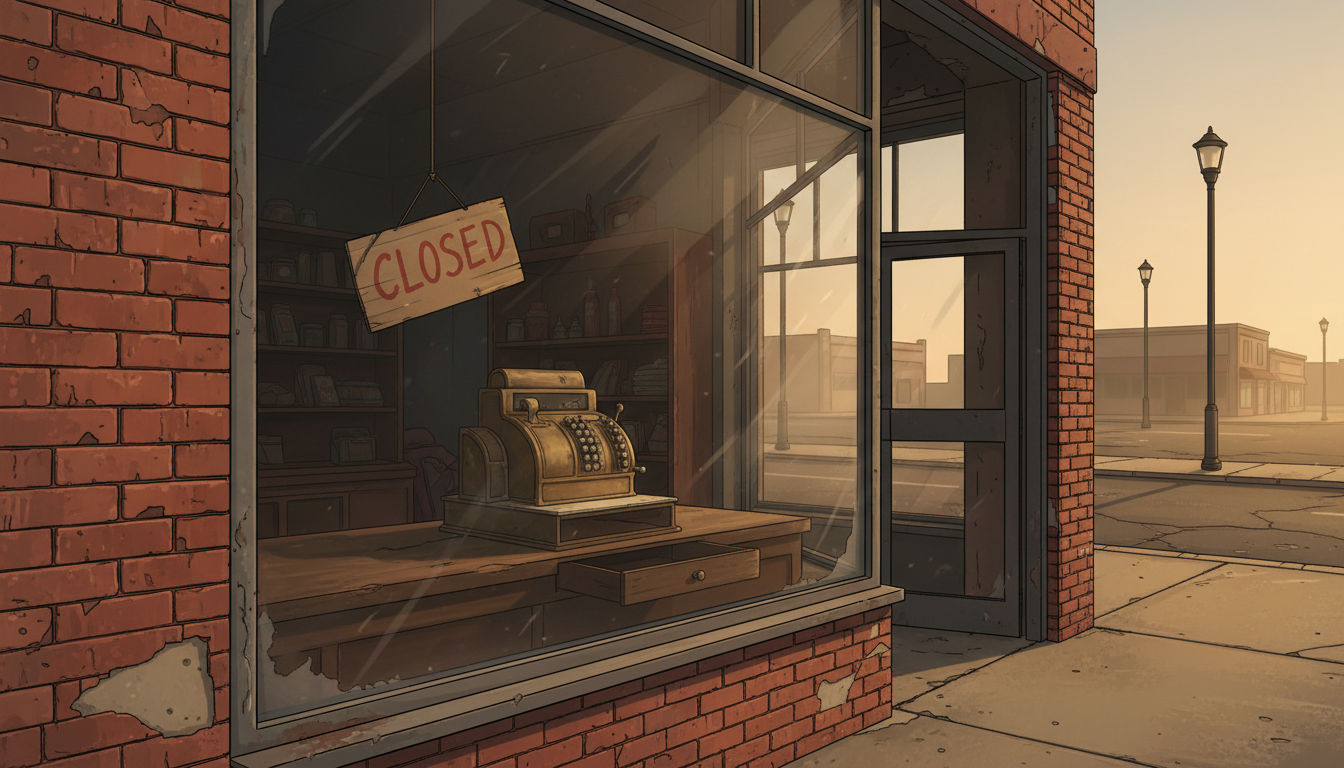
Tomorrow, we find out whether the inflation data gives them a reason to feel better — or another reason to keep the cash register closed.
Sources: NFIB Small Business Economic Trends (October 13, 2026), Reuters, Trading Economics, CME FedWatch, FactSet.