
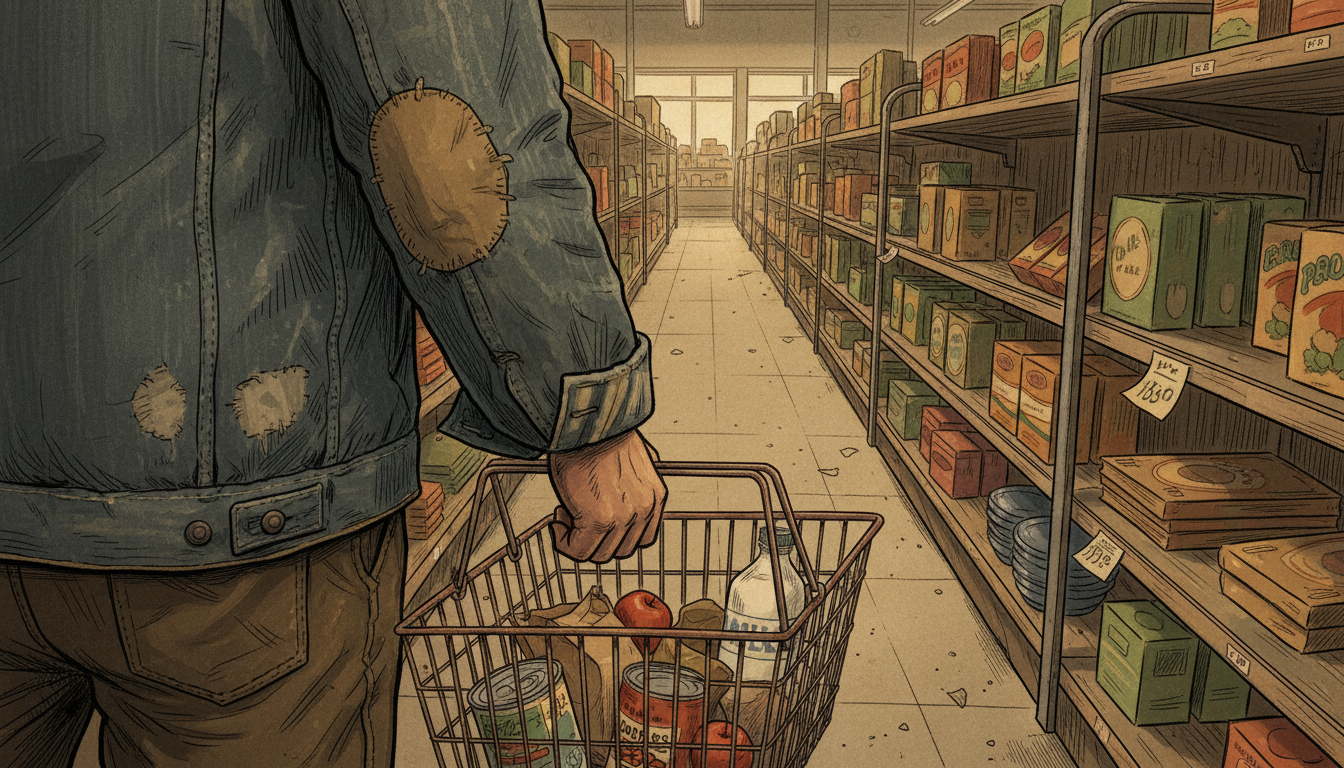
The inflation report that markets feared most landed squarely on Tuesday morning. The October Consumer Price Index came in hotter than expected on both headline and core measures — and Fed Governor Christopher Waller had already telegraphed that a hot print would push him toward advocating for a supersized December rate hike. The one-two punch sent Treasury yields surging and stock futures sliding, with traders now pricing in a 100% probability of a quarter-point move next month and, for the first time, a double-digit chance of something larger.
The Numbers
The consumer price index rose a seasonally adjusted 0.4% in October, the Bureau of Labor Statistics reported Tuesday. Economists surveyed by Dow Jones had been looking for a 0.3% increase. Stripping out volatile food and energy, core CPI increased 0.3% against the forecast for a 0.2% gain.
One notable absence: the BLS did not estimate a yearly inflation rate this month. The government shutdown in October 2025 prevented the bureau from collecting sufficient data, so there is no comparable 12-month figure. That unusual gap makes this report harder to contextualize — but the direction is unmistakable.
Here’s what drove the October increase:
- Energy: +0.7% — Gasoline up 1.0%, though natural gas dipped 0.8%. This comes on the heels of September’s 5.2% energy surge, so the pace is cooling but still positive.
- Food: +0.5% — Snacks jumped 1.0%, beef rose 0.9%, and the broader meats/poultry/fish/eggs category added 0.5%.
- Shelter: +0.3% — The BLS noted that shelter alone accounted for more than 30% of the headline monthly increase. It remains the stubborn, slow-moving anchor of the inflation story.
- Transportation services: +0.8% — Airline fares accelerated 0.4%.
- Electricity: +0.9% — AI hyperscaler infrastructure spending is increasingly cited as a source of energy cost pressure, and the October data bears that out.
- Used cars and trucks: -1.2% — One of the few deflationary bright spots. New vehicle prices rose just 0.2%.
- Apparel: +0.1% — Tariff-sensitive clothing was barely changed, suggesting the trade-war inflation channel may be easing at the retail level.
- Medical care commodities: +0.5% — A category that bears watching as healthcare costs feed into broader service-sector inflation.
What Waller Said (Before He Saw the Data)
Speaking in London hours before the CPI release, Fed Governor Christopher Waller laid out a framework that now reads like a pre-commitment. He said he was “leaning toward” a December rate increase even if inflation data came in soft — and explicitly called for a 50-basis-point hike if the numbers ran hot.
“In that case, I believe a 50 basis point hike in the policy rate should be considered at the December meeting. Hiking only 25 basis points would put our credibility at risk, a risk I am not eager to take.”
Waller framed the argument around credibility: the Fed’s October meeting communications led markets to price in further hikes, and failing to follow through would loosen financial conditions in an undesirable way. “Higher rates will be needed, sooner rather than later,” he added.
The October CPI print — beating on both headline and core — would appear to clear the bar Waller set for “more robust action.” Whether the rest of the FOMC agrees is the open question heading into the December 8-9 meeting. The October rate decision was already controversial, drawing dissents from Governor Lisa Cook and Cleveland Fed President Beth Hammack.
The Business Perspective
Main Street isn’t waiting for the Fed to make up its mind. The NFIB’s October Small Business Optimism Index edged down to 97.8 from 97.9 in September, but the real story lies in the sub-indexes. A net 37% of businesses reported plans to raise prices in the next three months — the highest reading since July 2022. That’s a flashing signal that businesses expect inflation to persist and are front-running it with their own pricing.
And consumers, for their part, haven’t hit the brakes. Retail sales rose 0.8% in September, and the Conference Board’s Consumer Confidence Index jumped to 91.7 in October from 84.2. People are unhappy about prices — but they’re still paying them.
Market Reaction
Markets didn’t wait for the smoke to clear. Stock futures drifted lower immediately after the release. Treasury yields jumped — the 10-year was already hovering near 5% before the data and pushed higher on the hot print. The CME FedWatch tool showed traders fully pricing in a quarter-point December hike (up from roughly 80% before the release) and putting 13.6% odds on a half-point move, a scenario that had zero probability before Tuesday morning.
“This was the report the market could least afford to see,” said Karen Manna, fixed income investment strategist at Federated Hermes. “A hotter inflation print raises fresh questions about whether the Fed has done enough to contain price pressures and reinforces the risk that interest rates will need to stay higher for longer.”
Bottom Line
December is a live round. The Fed’s current benchmark rate sits at 3.75%-4.00%, and a quarter-point hike next month now looks like the floor, not the ceiling. The combination of a hot CPI, Waller’s explicit half-point threat, and businesses signaling their own price hikes creates a hawkish convergence that will dominate the five weeks between now and the December FOMC meeting.
What to watch between now and then: the October PPI (due Thursday), October retail sales, and the November jobs report. If any of those reinforce the hot-inflation-plus-strong-consumer narrative, the half-point debate goes from Waller’s hypothetical to a genuine probability. The Iran conflict, Trump-era tariffs, and AI-driven electricity demand are not fading as inflation inputs — and the Fed is running out of reasons to wait.
Sources: Bureau of Labor Statistics, CNBC, NFIB, CME FedWatch, Conference Board, Dow Jones